Difference Between IPTV and OTT: Understanding How They Deliver Digital Entertainment
Introduction
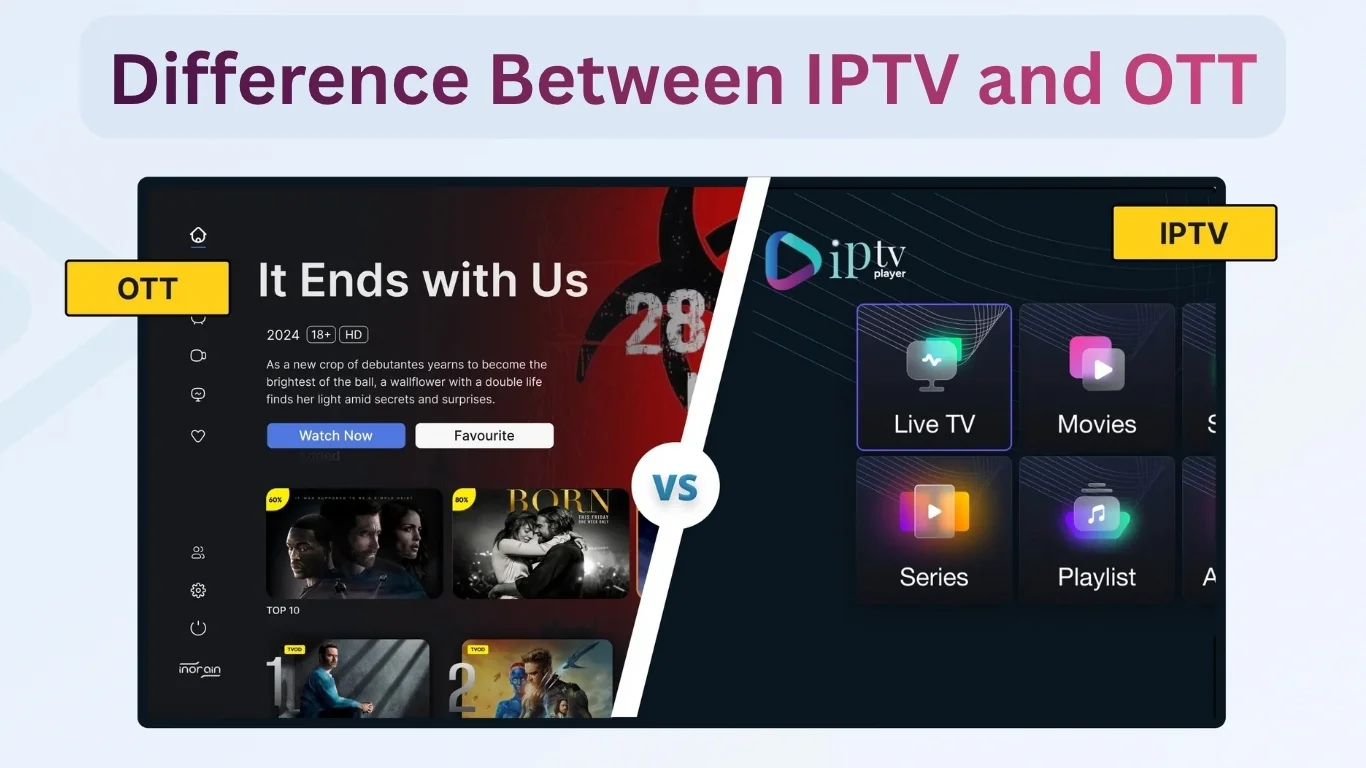
With streaming and on-demand content dominating modern entertainment, two major technologies often come up: IPTV (Internet Protocol Television) and OTT (Over-the-Top). While both deliver video over the internet, they differ in delivery method, infrastructure, and user experience.
Understanding the difference between IPTV and OTT helps users, businesses, and content creators choose the right platform for their needs. Let’s break down how each works and what makes them unique.
What Is IPTV?
IPTV (Internet Protocol Television) is a system that delivers live TV and on-demand content through a dedicated, private internet connection. Instead of using traditional broadcast methods like satellite or cable, IPTV uses a closed network managed by an IPTV UK Provider or a 4K IPTV Subscription service.
How IPTV Works
IPTV operates via a set-top box or app that connects to your home broadband. The provider manages the servers, content, and streaming quality to ensure a stable experience.
Key features of IPTV include:
-
Controlled bandwidth for stable streaming
-
Electronic Program Guides (EPG)
-
Live TV and Video on Demand (VOD) options
-
Multicast streaming (ideal for live events)
Pros of IPTV
-
Consistent quality due to managed networks
-
Live TV support with minimal buffering
-
Customizable packages from providers
Cons of IPTV
-
Requires specific hardware or apps
-
Dependent on the service provider’s infrastructure
-
Less flexibility for use on-the-go
What Is OTT?
OTT (Over-the-Top) refers to the delivery of video content directly over the public internet, without needing a dedicated service provider. Examples include Netflix, YouTube, and Disney+.
Unlike IPTV, OTT doesn’t require a closed network. Viewers can stream content on any device—smart TVs, smartphones, tablets, or PCs—using just an internet connection.
How OTT Works
OTT uses the open internet to distribute content via streaming apps or websites. The provider doesn’t control the network—only the content.
Common OTT delivery models include:
-
SVOD (Subscription Video on Demand) – e.g., Netflix
-
AVOD (Ad-supported Video on Demand) – e.g., YouTube
-
TVOD (Transactional Video on Demand) – e.g., iTunes movies
Pros of OTT
-
Accessible from any device or location
-
No installation or special equipment required
-
Greater flexibility and variety of content
Cons of OTT
-
Dependent on internet speed and stability
-
Quality varies by network conditions
-
Limited support for traditional live channels
Key Differences Between IPTV and OTT
| Feature | IPTV | OTT |
|---|---|---|
| Network Type | Private managed network | Public internet |
| Hardware | Requires set-top box or app | Works on any device |
| Control Over Quality | High (managed bandwidth) | Variable (based on connection) |
| Content Type | Live TV + VOD | VOD, Live Streams, Original Series |
| Accessibility | Regional or provider-based | Global access |
| Setup | Requires subscription from IPTV UK Provider | App-based, self-managed |
| Cost | Often bundled with internet plans | Flexible subscription or ad-supported |
IPTV vs OTT: Which Is Better?
Choosing between IPTV and OTT depends on your viewing habits and priorities:
-
Choose IPTV if you want stable live TV, premium sports channels, and 4K IPTV subscriptions with controlled quality.
-
Choose OTT if you prefer on-demand content, multi-device access, and flexible pricing.
For many users, a hybrid setup—using IPTV for live TV and OTT for entertainment—offers the best of both worlds.
Frequently Asked Questions (FAQs)
1. Is IPTV the same as OTT?
No. IPTV uses a private, managed network, while OTT delivers content through the open internet.
2. Do I need a set-top box for OTT?
No. OTT services run on apps or browsers, unlike IPTV which often requires a dedicated receiver.
3. Which offers better video quality?
IPTV generally offers more consistent quality, as it operates on a controlled network. OTT quality depends on your internet speed.
4. Can I watch IPTV without a provider?
No. IPTV requires a subscription from a licensed provider, such as a UK IPTV Service.
5. Is OTT legal and safe to use?
Yes, as long as you use official platforms like Netflix or YouTube. Avoid unlicensed streaming apps.
Conclusion
Both IPTV and OTT have revolutionized how we consume television and movies. While IPTV ensures reliability and live content, OTT offers freedom and flexibility. Understanding their differences empowers you to make the right choice based on your viewing needs and internet setup.
For a deeper technical explanation of how internet streaming works, check out Wikipedia’s article on Streaming Media.
Conclusion
To conclude, Difference Between IPTV and OTT: Understanding How They Deliver Digital Entertainment provides valuable insights into improving your IPTV experience on any device.
By following the steps in this guide, you can enjoy smooth and high-quality streaming with ease.
Always rely on a trusted IPTV provider, keep your app updated, and maintain a stable internet connection for the best performance.
For reliable IPTV services in the UK, visit
4K Subscription —
your go-to destination for premium IPTV UK subscriptions.
Contact Us
Have questions or need assistance? We're here to help!
Get in Touch
Email Us
contact@4kukiptv.shop
Available 24/7
Call Us
+447424116014
Available 24/7
Live Chat
Available on our website
Response time: Under 5 minutes
Our Hours
Customer Support: 24/7
Sales Department: Mon-Fri, 9am-6pm GMT
Technical Support: 24/7