Iptv Lag

Introduction
If you’ve ever settled down to watch your favorite football match or boxing event only for your IPTV service to start freezing, buffering, or completely crashing, you’re not alone. It’s one of the most common frustrations among IPTV users worldwide.
In this guide, we’ll break down why IPTV crashes during live matches, what’s actually happening behind the scenes, and how you can fix or prevent it from ruining your viewing experience.
Understanding IPTV Streaming
Internet Protocol Television (IPTV) delivers TV channels and on-demand content through an internet connection rather than traditional satellite or cable systems. Services like IPTV UK Provider or 4K IPTV Subscription rely heavily on servers, bandwidth, and internet stability to stream high-quality live content.
When a live match is broadcast, millions of viewers may connect to the same server at once — and that’s where the trouble often begins.
For a deeper understanding of how live streaming technology works, visit Wikipedia’s article on Internet Protocol Television.
1. Server Overload During Peak Demand
The Main Culprit Behind IPTV Crashes
The primary reason IPTV crashes during live matches is server overload. Every IPTV service operates with a set capacity for simultaneous connections.
When that limit is exceeded — for example, during popular events like the Champions League final — the servers struggle to handle all the traffic.
Symptoms of Server Overload:
- Sudden buffering or freezing
- Stream quality is dropping automatically
- Complete service disconnection
What You Can Do:
- Choose a reliable UK IPTV service with strong server infrastructure.
- Avoid connecting multiple devices at once.
- Restart your app to reconnect to a less congested server.
2. Insufficient Internet Bandwidth
Your Connection Might Be the Bottleneck
Even with a premium IPTV subscription, poor internet can lead to crashes. IPTV requires a stable broadband connection—typically at least 25 Mbps for HD streaming and more for 4K.
Bandwidth Issues Often Caused By:
- Shared Wi-Fi with multiple devices streaming or gaming
- Weak router signal
- Network throttling by your Internet Service Provider (ISP)
Quick Fixes:
- Connect your device via Ethernet cable instead of Wi-Fi.
- Restart your router before a big match.
- Test your internet speed using a tool like Speedtest.net.
3. Poor App or Player Optimization
When the IPTV App Itself is the Problem
Sometimes the issue isn’t the service or your connection — it’s the player.
Outdated or poorly designed IPTV apps can crash under load, especially when handling high-bitrate live streams.
Fixes Include:
- Updating to the latest version of your IPTV player.
- Clearing cache and unnecessary app data.
- Switching to a more stable app (like Tivimate or Smart IPTV).
4. Geo-Restrictions and ISP Blocking
The Silent Cause of IPTV Crashes
ISPs often detect and throttle or block IPTV traffic, particularly during live events. These restrictions can interrupt data flow, causing buffering or app shutdowns.
What You Can Do:
- Use a VPN (Virtual Private Network) to mask IPTV traffic.
- Choose a VPN server close to your IPTV provider’s region (e.g., UK or EU).
- Avoid free VPNs, as they often have limited bandwidth.
5. Outdated Firmware or Devices
Your Device Might Be Struggling
Old Smart TVs, Android boxes, or Firesticks may not handle modern IPTV streaming protocols efficiently.
During live events, decoding HD streams in real-time puts a heavy load on outdated hardware.
Prevention Tips:
- Keep your device’s firmware updated.
- Use newer streaming boxes with at least 2GB of RAM.
- Close background apps before starting your IPTV app.
6. High Bitrate and Codec Compatibility Issues
When Video Quality Overpowers the Stream
IPTV streams are encoded using different codecs like H.264 or H.265.
If your device or app doesn’t support a specific codec or bitrate, it can cause lag, stuttering, or outright crashes — especially during fast-motion sports broadcasts.
Solutions:
- Lower stream quality manually if possible.
- Ensure your player supports HEVC (H.265).
- Contact your IPTV service provider to adjust stream settings.
7. CDN (Content Delivery Network) Failures
Behind-the-Scenes Technical Glitches
Most UK IPTV services rely on CDNs to distribute content globally.
During live matches, if one CDN node goes down, streams can drop or loop endlessly.
What Can Be Done:
- Refresh your stream to connect to another CDN node.
- Some premium services offer backup CDNs — choose one that does.
- Report issues to your provider so they can reroute the connection.
8. Buffering vs. Crashing – Understanding the Difference
Many users confuse buffering with crashing, but they stem from different issues.
| Problem | Cause | Solution |
|---|---|---|
| Buffering | Slow connection or server congestion | Increase bandwidth, restart router |
| Crashing | App or server overload | Update app, clear cache, use alternate stream |
| Frozen Screen | Device memory or codec issue | Restart device, lower quality setting |
Understanding the difference helps you troubleshoot more effectively during those crucial match moments.
9. How to Prevent IPTV Crashes During Live Events
Here’s a quick checklist to ensure a smooth streaming experience:
- Use a wired Ethernet connection
- Test speed before every event
- Keep your IPTV app and device updated
- Avoid multitasking on your streaming device
- Subscribe to a trusted UK IPTV provider with multiple server backups
- Consider a VPN to reduce ISP throttling
Frequently Asked Questions (FAQs)
1. Why does IPTV crash only during live matches?
Live matches create massive simultaneous traffic, which can overload servers and cause temporary crashes.
2. Is buffering the same as crashing?
No. Buffering is a delay caused by insufficient data flow, while crashing means the stream or app has stopped completely.
3. Can using a VPN fix IPTV crashes?
Yes, if your ISP is throttling or blocking IPTV data. A good VPN can stabilize connections and prevent interruptions.
4. Will changing the IPTV app help?
Definitely, some IPTV apps handle streams more efficiently, reducing crashes caused by poor app optimization.
5. How can I know if my provider’s server is overloaded?
If multiple channels crash or buffer simultaneously while your internet speed is fine, it’s likely a server overload issue.
Conclusion
IPTV crashes during live matches aren’t just random — they usually result from server overload, weak internet connections, or device limitations. By understanding the root causes and applying preventive steps, you can enjoy uninterrupted streaming of your favorite sports events.
Choose a reliable IPTV UK provider, ensure your setup is optimized, and prepare ahead of major matches — because when kickoff starts, every second counts.
Iptv Lag
Introduction
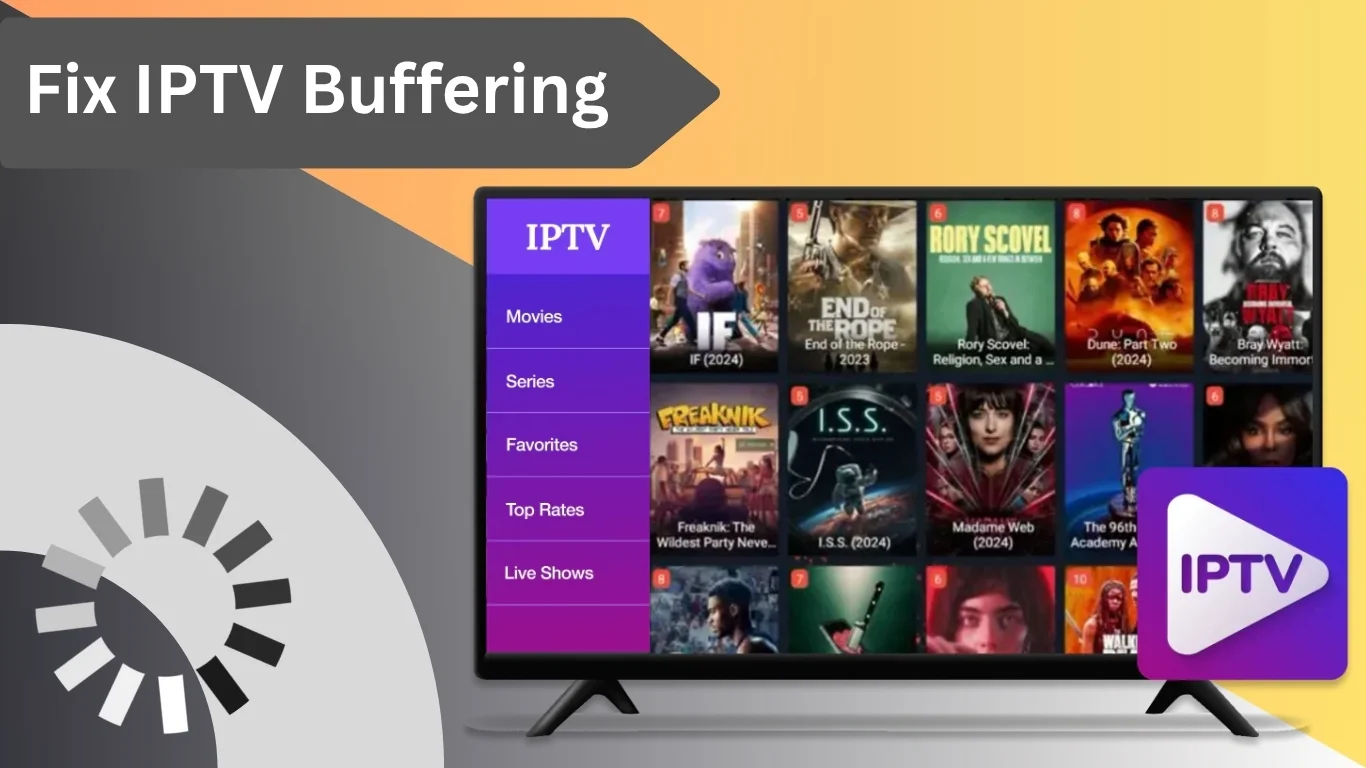
Nothing ruins a good movie night like constant buffering. If you use an IPTV service, you’ve probably experienced moments when the stream pauses to load or the video lags. IPTV buffering issues are common but fixable with the right techniques.
In this guide, we’ll explore the most common causes of buffering and share effective ways to resolve them. Whether you use an IPTV UK Provider, 4K IPTV Subscription, or any other UK IPTV Service, these solutions apply to all.
What Causes IPTV Buffering?
Before you can fix IPTV buffering problems, it’s important to understand the root causes. Buffering occurs when your IPTV device cannot download data fast enough to play the video continuously. Common causes include:
- Slow Internet Connection – Insufficient bandwidth causes your IPTV to struggle when streaming HD or 4K content.
- Overloaded IPTV Server – If too many users connect to the same IPTV server, it can slow down data delivery.
- Wi-Fi Interference – Weak or unstable Wi-Fi signals lead to inconsistent streaming.
- Outdated Hardware or Software – Old devices, firmware, or apps can cause playback issues.
- ISP Throttling – Some Internet Service Providers may intentionally slow down streaming data.
- High Traffic Times – Peak usage hours can affect your connection speed.
Step-by-Step Solutions to Fix IPTV Buffering Issues
1. Check Your Internet Speed
A strong internet connection is the foundation of smooth IPTV streaming. For HD IPTV, you should have at least 10 Mbps, and for 4K IPTV, a minimum of 25 Mbps is recommended.
How to check:
- Use Speedtest.net or a similar service.
- Test both download and upload speeds.
If your speeds are consistently low, contact your ISP or consider upgrading your plan.
2. Use a Wired Ethernet Connection
Wi-Fi may be convenient, but it’s not always reliable. A wired Ethernet cable offers a more stable and faster connection.
Why it helps:
- Reduces signal interference.
- Ensures consistent data flow to your IPTV device.
If you must use Wi-Fi, position your router close to your device and avoid physical obstructions.
3. Reboot Your Router and IPTV Device
Sometimes, a simple restart can solve buffering issues.
Steps:
- Turn off your IPTV device and unplug your router.
- Wait at least 60 seconds.
- Plug them back in and allow them to reboot fully.
This clears temporary network errors and refreshes your connection.
4. Reduce Network Load
Too many connected devices can slow down your connection. Streaming IPTV while others are gaming, downloading, or using video calls can cause buffering.
Tips:
- Limit background downloads.
- Disconnect unused devices.
- Use Quality of Service (QoS) settings on your router to prioritize IPTV traffic.
5. Clear IPTV App Cache
Over time, cached data can cause playback problems. Clearing the cache in your IPTV player can improve performance.
To clear cache:
- Go to Settings > Apps > Your IPTV App > Storage > Clear Cache.
- Restart your device afterward.
6. Update Your IPTV App and Device Firmware
Outdated apps or firmware may not handle modern streaming protocols efficiently.
What to do:
- Check for updates in your IPTV app store.
- Update your device’s operating system or firmware.
New versions often fix bugs that cause freezing or lag.
7. Change Your IPTV Server or Playlist
If you use an IPTV UK Provider or 4K IPTV Subscription, try switching to another available server. Overcrowded servers can slow down streaming speeds.
Most IPTV apps allow you to:
- Change server URLs.
- Refresh or update your M3U playlist.
- Remove inactive or expired channels.
8. Adjust Video Player Settings
Lowering the streaming resolution can help if your internet speed is inconsistent.
For example:
- Change from 4K to 1080p or 720p.
- Enable adaptive bitrate streaming (if available).
This balances quality and performance based on your connection.
9. Use a VPN (Virtual Private Network)
Some ISPs throttle IPTV data. Using a VPN can bypass such restrictions and stabilize streaming.
Benefits:
- Hides your traffic from your ISP.
- Reduces buffering due to throttling.
- Enhances privacy.
Choose a fast VPN with servers near your location to maintain speed.
10. Change Your DNS Settings
DNS servers translate website addresses into IPs. Using faster DNS can improve connectivity.
Recommended DNS options:
- Google DNS: 8.8.8.8 / 8.8.4.4
- Cloudflare DNS: 1.1.1.1 / 1.0.0.1
You can update these in your router or IPTV device’s network settings.
11. Avoid Using Free IPTV Apps
Free IPTV apps often use overloaded servers that can’t handle heavy traffic. Paid or reliable IPTV services tend to offer better stability and dedicated support.
When choosing a provider, look for:
- Consistent uptime.
- Active support.
- Regular channel updates.
12. Use a Streaming Device Optimized for IPTV
Devices like Amazon Fire TV Stick, Nvidia Shield, or Android TV Boxes are designed for smooth video streaming. Please make sure yours supports hardware acceleration and HEVC (H.265) decoding for best results.
13. Check for Background Processes
Other apps running in the background can consume CPU and bandwidth; close unnecessary apps before starting your IPTV stream.
On Android:
- Go to Settings > Apps > Running Apps > Stop Unused Apps.
14. Avoid Peak Streaming Hours
Stream during non-peak hours. Between midnight and early morning, network congestion is usually lower, resulting in fewer buffering interruptions.
Advanced Solutions for Persistent Buffering
If the basic steps don’t help, try the following advanced fixes:
Use an IPTV-Optimized Router
Routers with better CPU power and dual-band capability can handle IPTV data more efficiently. Consider models supporting MU-MIMO and beamforming technology.
Configure QoS (Quality of Service)
Most routers have a QoS feature that prioritizes IPTV traffic. Log in to your router’s dashboard and set your IPTV device to “high priority.”
Replace Old Cables
Outdated or damaged Ethernet cables (Cat 5 or below) can reduce speed. Upgrade to Cat 6 or Cat 7 cables for stable connections.
FAQs About Fixing IPTV Buffering
1. Why does my IPTV keep buffering even with high-speed internet?
This may be due to server congestion or ISP throttling. Try switching servers or using a VPN.
2. Can using a VPN improve IPTV performance?
Yes, a VPN can bypass throttling and ensure stable connections, especially with providers known to restrict streaming.
3. Does IPTV buffering depend on the provider?
Yes. The reliability of your IPTV UK Provider or UK IPTV Service impacts buffering. Providers with strong infrastructure deliver smoother streaming.
4. What internet speed do I need for IPTV?
For HD content: at least 10 Mbps. For 4K content: 25 Mbps or higher.
5. Why is my IPTV freezing on specific channels?
That particular server or channel stream may be unstable. Try switching to a backup link or alternate channel.
Conclusion
IPTV buffering issues can be frustrating, but they’re not unbeatable. By optimizing your connection, adjusting settings, and ensuring your device and app are up-to-date, you can enjoy seamless viewing.
A stable internet connection, wired setup, and reliable IPTV service are the cornerstones of smooth streaming. Take time to apply these fixes, and you’ll transform your viewing experience from laggy to lightning-fast.
For further technical insights on how streaming works, visit Wikipedia’s article on Streaming Media.
Simple, Transparent Pricing
Choose the plan that works best for you. All plans include our 30-Day Money-Back Guarantee.
Limited Time Flash Sale!
Prices will return to normal after the timer ends.
Monthly
Perfect for trying out our service
-
28,000+ Live TV Channels
-
Full HD & 4K Quality
-
7-Day Catch Up
-
VOD Library (Movies & Series)
-
Use on 1 Device
-
24/7 Support via WhatsApp
3 Months
Great value for short term
-
28,000+ Live TV Channels
-
Full HD & 4K Quality
-
7-Day Catch Up
-
VOD Library (Movies & Series)
-
Use on 2 Devices Simultaneously
-
24/7 Support via WhatsApp
-
Save over 20% vs Monthly
Annual
Best value for loyal customers
12 Months + 2 Months FREE
-
28,000+ Live TV Channels
-
Full HD & 4K Quality
-
7-Day Catch Up & Recording
-
Premium VOD Library (Updated Daily)
-
Use on 3 Devices Simultaneously
-
VIP 24/7 Support
-
Save over 60% vs Monthly
-
Free Setup Assistance
Quarterly
Popular choice for commitment
-
28,000+ Live TV Channels
-
Full HD & 4K Quality
-
7-Day Catch Up & Recording
-
Extensive VOD Library
-
Use on 2 Devices Simultaneously
-
Priority 24/7 Support
-
Early access to new features
Secure Payment Options
We accept various secure payment methods for your convenience.
Ready for a Longer Test Drive?
Experience the full power of 4K Subscription IPTV with our exclusive 24-hour free trial. Access all 28,000+ channels, VOD, and premium features with no obligation. It's the perfect way to see why we're the UK's favourite IPTV provider!
Contact Us
Have questions or need assistance? We're here to help!
Get in Touch
Email Us
contact@4kukiptv.shop
Available 24/7
Call Us
+447424116014
Available 24/7
Live Chat
Available on our website
Response time: Under 5 minutes
Our Hours
Customer Support: 24/7
Sales Department: Mon-Fri, 9am-6pm GMT
Technical Support: 24/7